
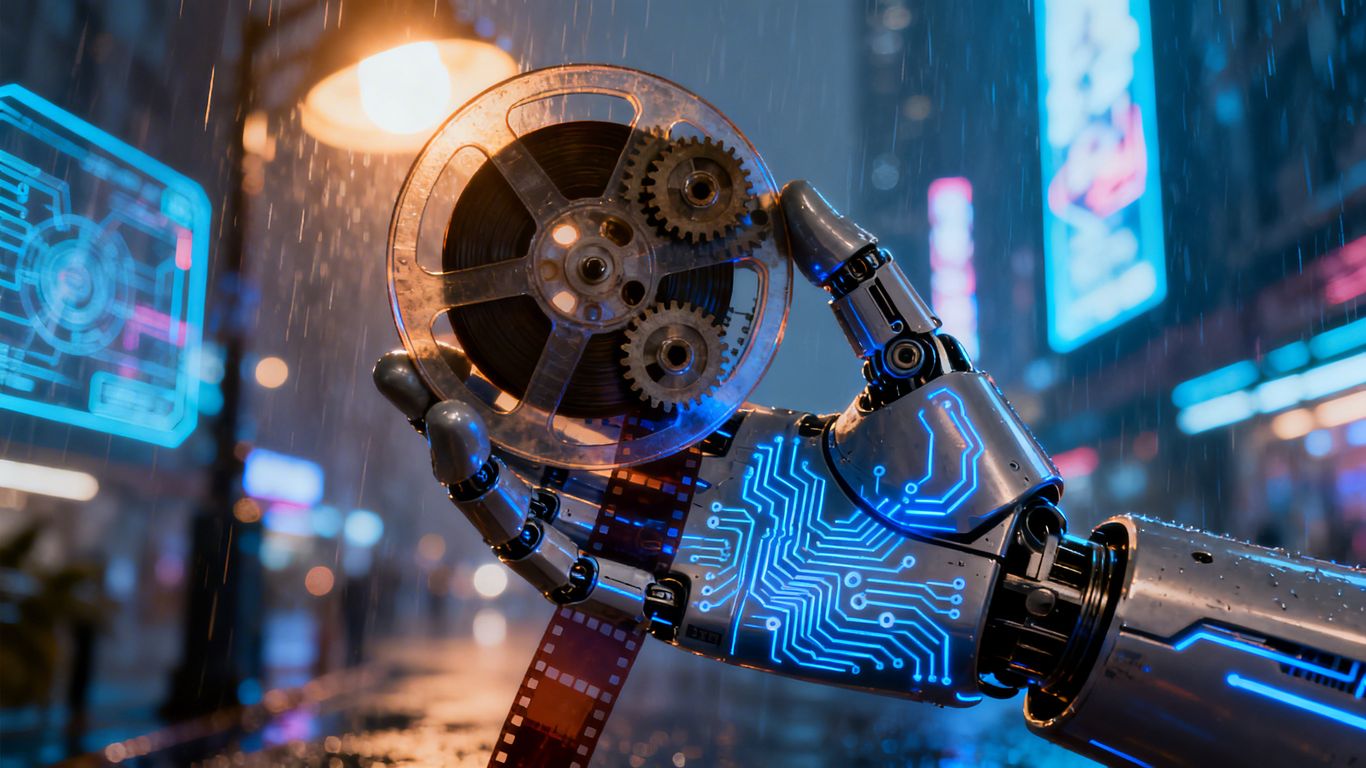

The rapid advancement of generative artificial intelligence (AI) is casting a long shadow over the media and entertainment industries, sparking widespread concerns about job security and the future of creative roles. While AI promises increased efficiency, its potential to automate tasks and generate content raises significant questions about the value and necessity of human creativity in these sectors.
Key Takeaways
- Generative AI poses a significant threat to creative roles in media and entertainment, with early-career positions already showing a decline.
- While AI can enhance productivity and assist in creative processes, it also risks devaluing human work and exacerbating existing exploitative conditions.
- The industry is seeing increased lobbying efforts in Washington D.C. to address AI's impact on intellectual property, likeness rights, and job security.
- A lack of transparency from employers regarding AI usage and data training is a major concern for creative workers.
- While some AI projects fail, the successful integration of AI into creative workflows suggests a shrinking labor market for certain creative tasks.
The Growing AI Threat to Creative Professions
Generative AI is rapidly evolving, capable of producing complex texts, high-quality images, and videos in mere minutes. This capability is leading to fears that AI could automate a significant portion of tasks within the arts, design, entertainment, and media sectors. A study from the Stanford Digital Economy Lab indicated a 16% reduction in employment for early-career workers, underscoring the immediate impact of AI on job availability. While some AI pilot projects fail, the underlying technology's potential to disrupt established creative workflows is undeniable.
Task-Technology Fit and Creative Roles
Experts suggest that generative AI is particularly well-suited for "generation-dominant" tasks, such as creating initial drafts of scripts, storyboards, or marketing slogans, where multiple solutions can be effective. This contrasts with "retrieval-dominant" tasks that rely on existing data. While high-stakes productions requiring a unique human touch may continue to rely on expert creatives, even these roles could see reduced headcounts as AI assists in faster and more efficient content generation. Low-stake creative roles, especially those involving first drafts and less demanding production values, are considered most vulnerable to significant disruption.
Industry Response and Lobbying Efforts
In response to these growing concerns, the media and entertainment industry is increasing its engagement with policymakers. Hollywood talent agencies and unions are actively lobbying in Washington D.C. to address issues such as intellectual property rights, the unauthorized use of likenesses, and the potential displacement of human workers. Efforts are underway to clarify copyright laws, establish licensing schemes for AI companies, and ensure transparency in how creative work is used for AI training. The industry is also pushing for policies that protect creators' rights against AI-generated clones and deepfakes.
Ethical Concerns and the Future of Work
Beyond job displacement, generative AI raises profound ethical questions regarding originality, authorship, and ownership. Workers report feeling that their skills are being diminished as they are increasingly asked to review AI-generated content rather than create original work. This shift can lead to a reduction in the perceived financial value of creative labour. Furthermore, a lack of transparency from employers about how AI is being used, particularly for training models, fuels anxiety among creative professionals. While AI can enhance productivity and offer new learning opportunities for some, there is a clear need for fairer compensation models, stronger intellectual property protections, and clearer guidelines to navigate this evolving landscape.
Sources
- Why Generative AI Threatens Creative Roles In Media And Entertainment, Yahoo News Australia.