
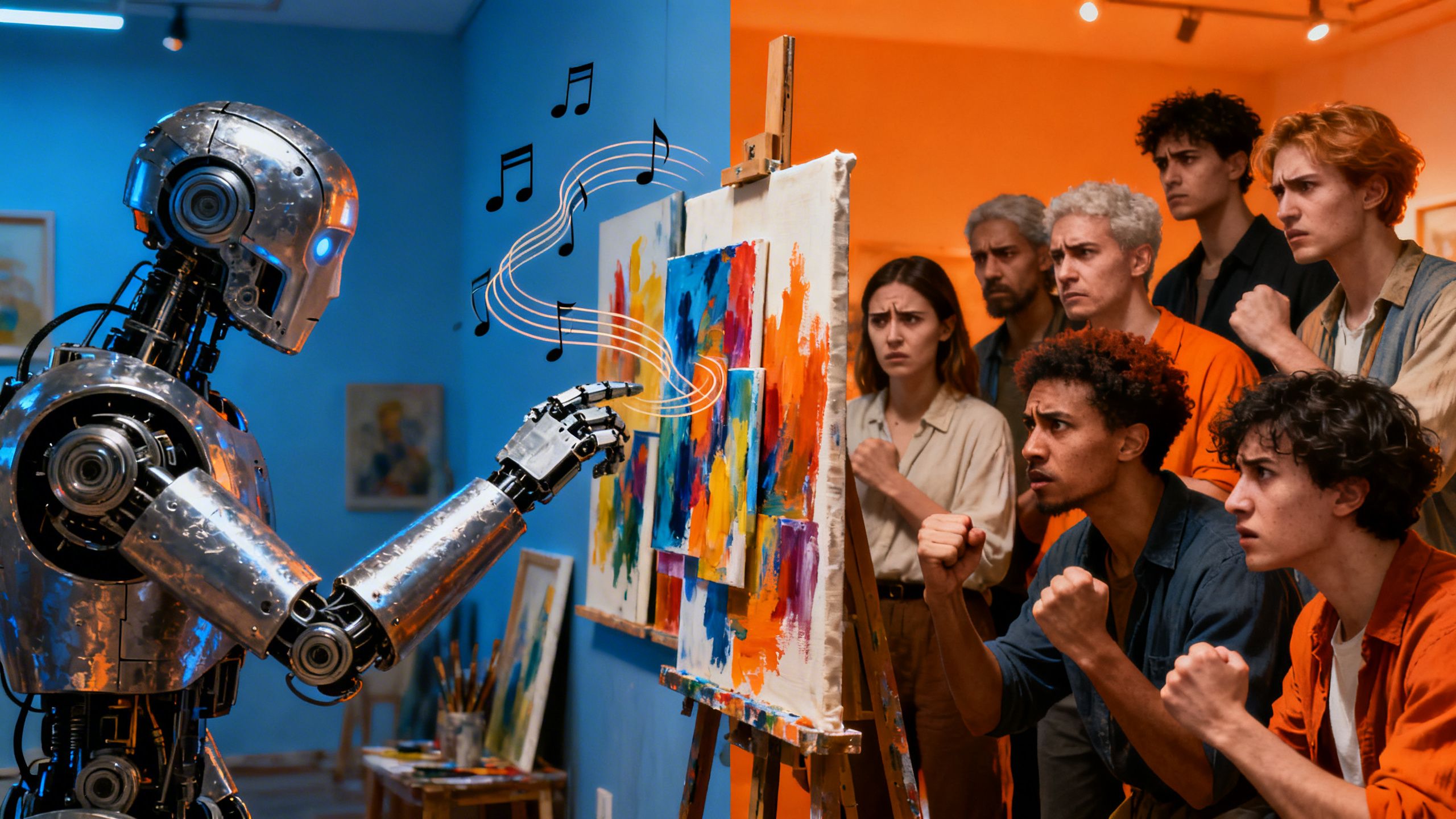

The UK government has announced a significant U-turn on its proposed approach to Artificial Intelligence (AI) and copyright. Initially, the plan allowed AI companies to train their models using copyrighted material with an opt-out system for creators. However, this sparked widespread criticism from prominent artists, leading the government to reconsider its position.
Key Takeaways
- The UK government has abandoned its initial proposal for AI training data.
- This decision follows strong opposition from major figures in the creative industries.
- The government is now seeking a new approach to balance AI innovation with creators' rights.
Government's Initial Proposal and Artist Opposition
The government's original plan would have permitted AI firms to utilise copyrighted works, including music, writing, and video, for training their models, provided creators could opt out. This approach drew sharp criticism, with artists like Sir Elton John and Dua Lipa voicing their strong disapproval. Sir Elton John famously described the potential use of copyrighted material without permission as "theft on a high scale."
The U-Turn and Current Stance
Technology Secretary Liz Kendall confirmed the government had "listened" to the concerns and would no longer favour the initial approach. However, the government has stated it now has "no preferred option" and is taking time to "get this right." This means the future regulatory framework for AI and copyright remains unclear.
Reactions from Creative and Tech Industries
Representatives from the creative sector hailed the government's backtrack as a significant victory. Tom Kiehl, chief executive of UK Music, stated that the move protects the livelihoods of hundreds of thousands of individuals in the industry. Mandy Hill, president of the Publishers Association, reiterated that existing copyright law clearly prohibits the use of copyrighted material for AI development without permission.
Conversely, the tech industry expressed concerns about the delay. Antony Walker, deputy chief executive of Tech UK, warned that the UK risks falling behind international competitors if a clear framework for AI innovation is not established promptly. Vinous Ali of the Startup Coalition highlighted the need for a "workable solution" to enable British AI startups to compete globally.
Moving Forward
The government has acknowledged the significant economic contributions of both the creative sector and the AI industry. It plans to continue extensive engagement with both parties to develop a balanced framework that supports technological advancement while safeguarding the rights of human artists. Until a new consensus is reached, the existing copyright laws will remain in effect.