
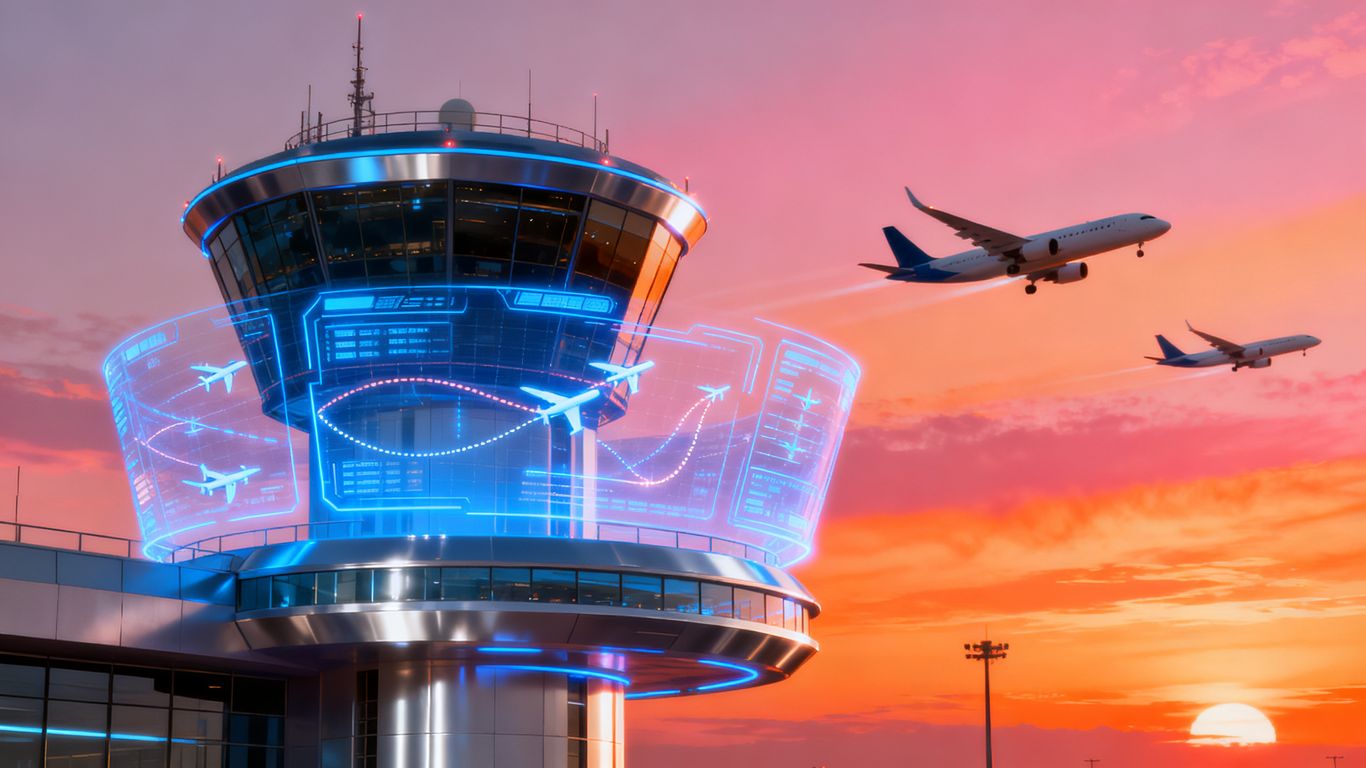

The Federal Aviation Administration (FAA) is embarking on a significant overhaul of its air traffic control (ATC) systems, leveraging artificial intelligence (AI) to modernise aging infrastructure and combat increasing flight delays. This ambitious initiative, dubbed the Strategic Management of Airspace Routing Trajectories (SMART), aims to proactively manage air traffic demand and prevent congestion before it impacts operations.
Key Takeaways
- The FAA is implementing an AI-powered initiative called SMART to manage airspace demand and prevent unexpected congestion.
- This overhaul is a response to decades of decaying technology and infrastructure, exacerbated by a catastrophic mid-air collision in January 2025.
- The project involves replacing aging radar systems, upgrading telecommunications networks from copper to fiber optics, and consolidating disparate automation platforms.
- While AI will assist in managing traffic flows, Transportation Secretary Sean Duffy has stressed that it will not replace human air traffic controllers.
- The initiative is part of a broader, multibillion-dollar effort to modernise the entire US air traffic control system.
Addressing Decaying Infrastructure
The current US air traffic control system is plagued by aging technology, with many of its 138 distinct telecommunication systems deemed unmaintainable due to a lack of spare parts. This decay directly contributes to flight delays, as controllers are forced to increase spacing between aircraft when legacy systems fail. The Brand New Air Traffic Control System (BNATCS) initiative, supported by an initial $12.5 billion investment, aims to replace 612 outdated radar units and thousands of miles of analog copper wiring with modern digital fiber optics.
The Role of Artificial Intelligence
The SMART initiative, led by companies like Thales, Air Space Intelligence, and Palantir, focuses on predicting air traffic flows and adjusting departure times to resolve potential conflicts. While not intended for safety-critical functions like aircraft separation, AI will help manage airspace demand and airport capacity proactively. This approach aims to smooth out traffic flows by anticipating issues like weather disruptions weeks or months in advance, working with airlines to adjust schedules and prevent reactive measures that lead to delays.
Modernising Automation and Connectivity
A critical component of the overhaul is the consolidation of fragmented automation platforms, such as ERAM and STARS, into a single Common Automation Platform (CAP). This unified system will provide a continuous data stream for aircraft tracking from takeoff to touchdown, reducing the cognitive load on controllers and enabling more advanced AI-driven conflict detection. The transition from analog copper wiring to high-capacity digital fiber optics is also crucial, offering higher bandwidth and immunity to electromagnetic interference, thereby improving data transmission reliability.
A Race Against Time
The urgency of this modernisation effort was amplified by a tragic mid-air collision near Ronald Reagan Washington National Airport in January 2025, which claimed 67 lives and exposed the lethal risks of outdated technology. The FAA is working under an aggressive three-year timeline, with a target completion date by the end of President Trump's second term in 2028. While the initial funding is substantial, the total estimated cost for BNATCS is between $30 billion and $32 billion, necessitating continued congressional support to ensure the project's success and the safety of the national airspace.