
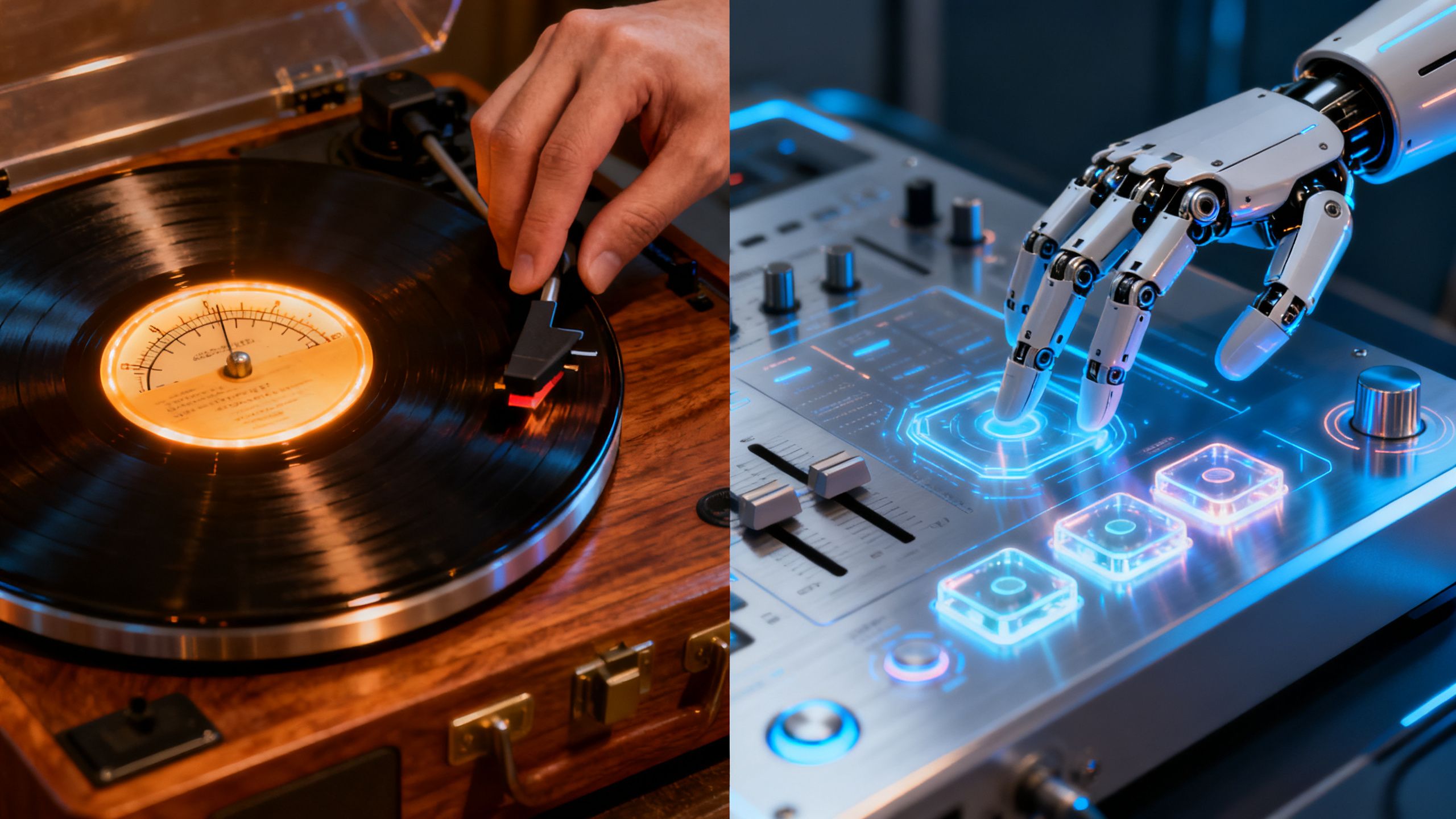

Artificial intelligence is rapidly transforming the music industry, sparking intense debate about its potential to revolutionise creativity or lead to the destruction of artists' livelihoods. From AI-generated tracks topping charts to major labels striking deals with AI companies, the landscape is shifting dramatically, raising profound questions about authorship, copyright, and the very essence of musical artistry.
Key Takeaways
- Generative AI can create new music from text prompts, raising concerns about copyright infringement and the devaluation of human creativity.
- Major record labels are increasingly partnering with AI companies, seeking new commercial opportunities while artists express apprehension.
- The debate centres on whether AI will be a tool to augment human creativity or a force that displaces human artists and undermines their income.
- Legal and regulatory frameworks are struggling to keep pace with AI's rapid advancements in the creative sector.
The Double-Edged Sword of AI in Music
Generative AI technologies, capable of producing entirely new content through machine learning trained on vast datasets, are making significant inroads into music composition. While these tools can amplify existing works and enhance user experiences, they also present a stark challenge to the livelihoods of musicians. AI can generate music based on existing styles and even mimic specific artists' voices, leading to concerns about unauthorised use of intellectual property and the potential for AI-generated content to flood the market, devaluing human-made art.
Artists' Concerns and Industry Shifts
Many musicians express deep concern about AI's impact. Independent artist Murphy Campbell experienced firsthand how AI-generated versions of her music appeared on streaming platforms, even leading to copyright claims against her own work. This "Wild West" scenario highlights the lack of robust checks and balances. Similarly, author A. J. Jacobs found AI-generated counterfeits of his books, illustrating a broader trend across creative industries.
Major Labels' Embrace of AI
Despite widespread artist apprehension, major record labels, initially wary of AI, are now actively forging partnerships with AI music companies. Universal Music Group, Warner Music Group, and Sony Music have all entered into deals, citing a desire to protect artists' rights and explore "new creative and commercial possibilities." These collaborations aim to "democratise music creation," allowing fans to co-create music with artists or remix existing songs. However, critics argue that such partnerships may sideline artists, leaving them with minimal compensation.
The Copyright Conundrum and Regulatory Lag
Central to the debate are complex issues of copyright and ownership. AI models are trained on massive datasets of existing music, often without explicit permission from the original creators. This has led to lawsuits, such as the Recording Industry Association of America's action against AI music companies Suno and Udio for alleged copyright infringement. Legal experts note that current regulatory systems are ill-equipped to handle the novel questions posed by AI-generated content, particularly regarding input data provenance and output accountability.
The Future of Musical Creation
While some view AI as a tool that can lower the barrier to entry for aspiring musicians and open new avenues for creativity, others fear it will diminish the value of human artistry. Experts suggest that AI-generated music might excel at producing functional background music for commercials or games, potentially impacting those sectors first. The long-term implications remain uncertain, with some predicting a future where human-created music, valued for its authenticity, gains even greater significance, while others foresee a landscape where AI-generated content dominates, driven by volume and velocity rather than artistic depth.
Navigating the Evolving Landscape
As AI continues to evolve, the music industry faces a critical juncture. The challenge lies in balancing technological innovation with the protection of human creators' rights and livelihoods. Initiatives like the Human Artistry Campaign coalition are working to establish ethical frameworks for AI use, while platforms like Fairly Trained aim to certify data sets used by AI companies. Ultimately, the future of music will depend on how effectively these complex issues of consent, compensation, and creative integrity are addressed.