
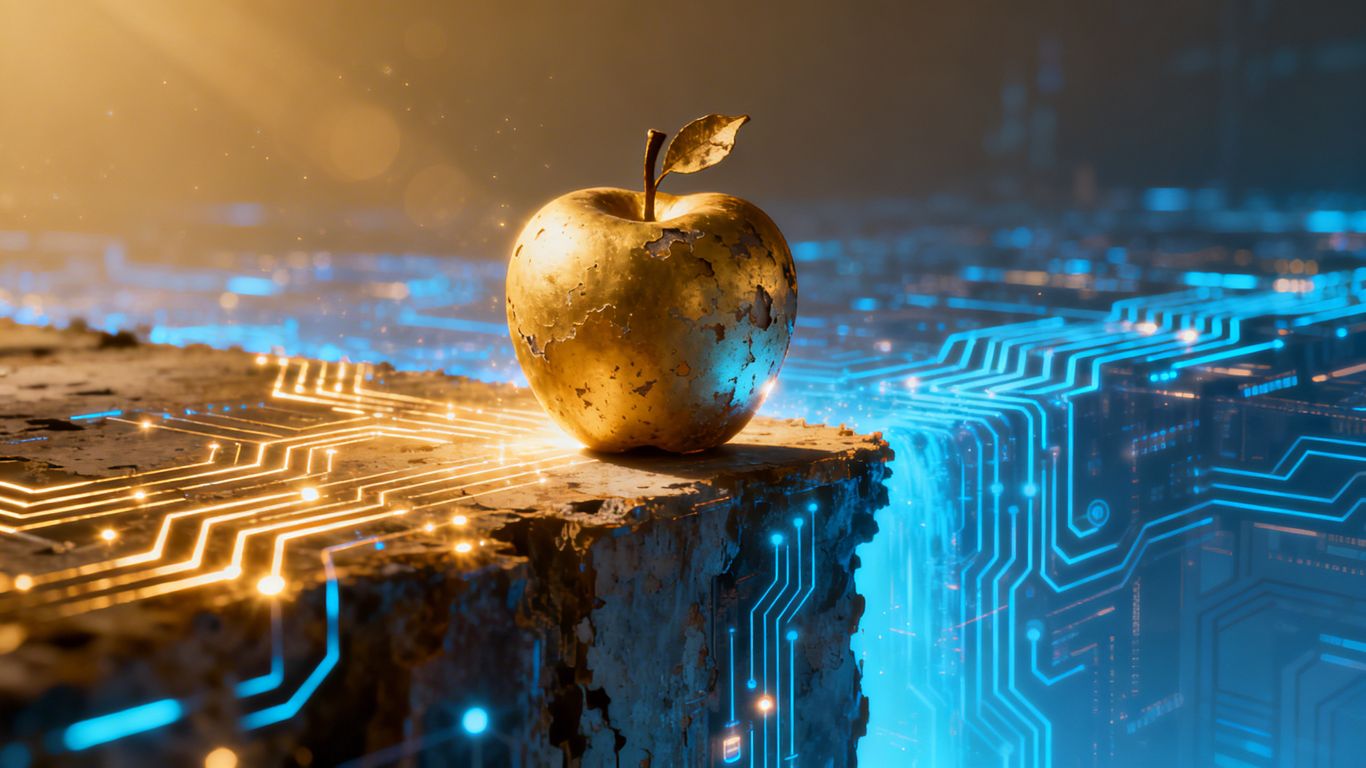

As Apple marks its 50th anniversary, the tech giant faces its most significant challenge yet: artificial intelligence. While celebrating a legacy of groundbreaking innovations that have reshaped global communication and consumer technology, Apple must now prove its ability to lead in the rapidly evolving AI landscape, a domain where rivals are making significant strides.
A Legacy of Innovation
Founded on April 1, 1976, in a Cupertino garage, Apple, driven by the vision of Steve Jobs and the engineering prowess of Steve Wozniak, revolutionised personal computing with the Macintosh in 1984. This was followed by transformative products like the iPod, iPhone, iPad, and Apple Watch, each commanding a devoted following and generating trillions in revenue. The iPhone, in particular, is hailed as the most successful consumer electronics product ever, fundamentally altering human communication and becoming a cultural icon.
The Shifting Business Landscape
With the premium smartphone market reaching saturation, Apple CEO Tim Cook has pivoted towards a strategy focused on digital content and services, leveraging the company's vast user base. The App Store, a central pillar of this strategy, has also attracted regulatory scrutiny due to accusations of monopolistic practices.
The China Factor
China has been instrumental to Apple's success, serving as both a primary manufacturing hub and a major consumer market. However, the company faces increasing pressure from trade tensions, which are prompting diversification of manufacturing to countries like India and Vietnam, and from fierce competition from domestic rivals within China.
The AI Challenge
Investors are closely watching Apple's approach to generative AI, as competitors like Google, Microsoft, and OpenAI surge ahead. A delayed upgrade to Siri, Apple's digital assistant, has been seen as a rare misstep. While Apple has reportedly sought AI capabilities from Google, its core tenets of user privacy and premium hardware could position it uniquely to drive personalised AI adoption and profitability, a goal that has eluded much of the AI industry.
- Key Takeaways:
- Apple is celebrating its 50th anniversary amidst intense competition in the AI sector.
- The company has a rich history of creating culture-changing products, notably the iPhone.
- Current strategies involve a focus on services and navigating geopolitical pressures in China.
- Apple's AI strategy, including its approach to Siri, is under scrutiny.
- User privacy and premium hardware are seen as potential advantages in the AI race.
- At 50, Apple confronts its next big challenge: AI, Yahoo Finance