
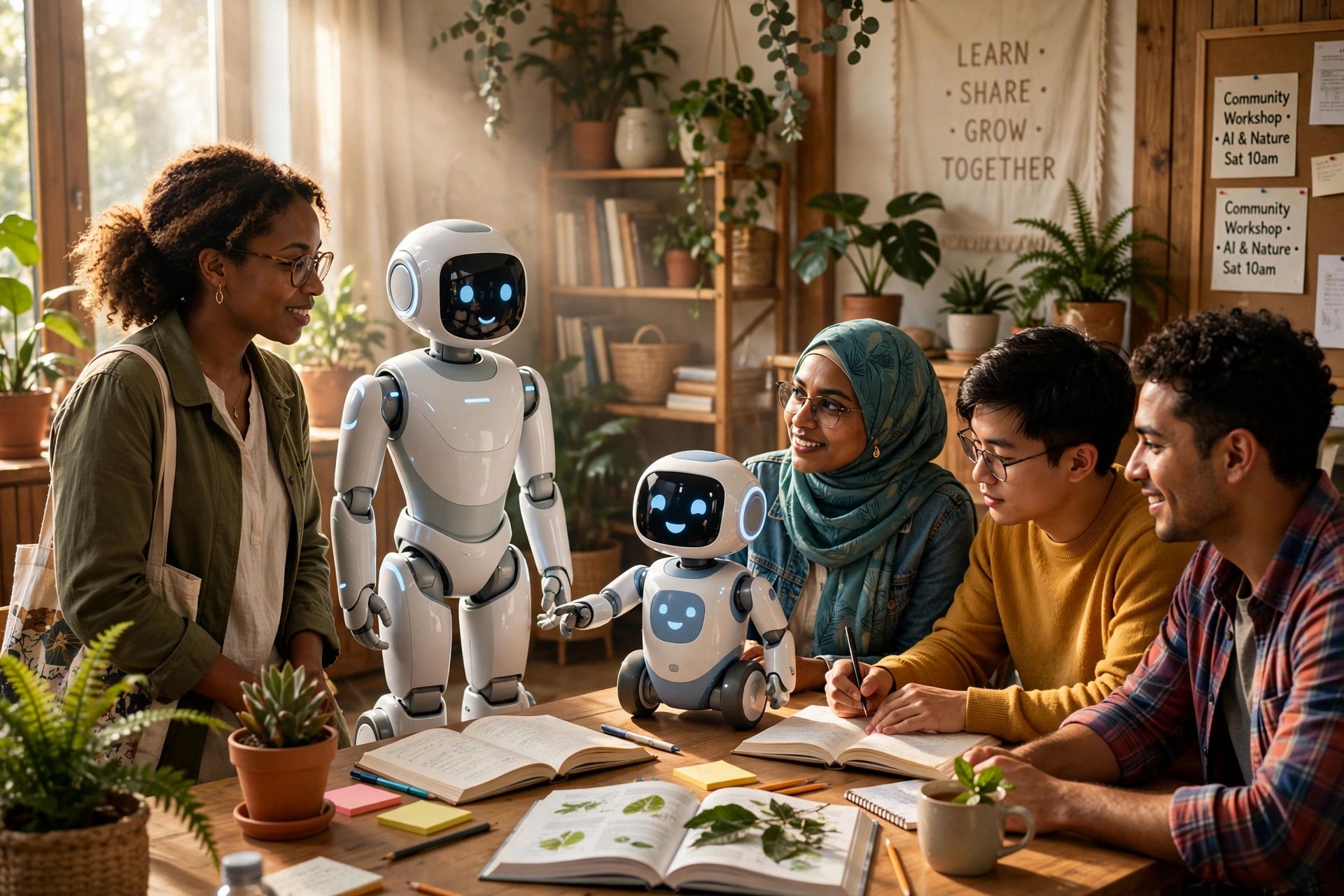
Psychotherapist Esther Perel and Khan Academy’s Sal Khan discuss how artificial intelligence may reshape education, work and relationships. Their conversation turns on a timely question: as technology helps us optimise more of life, are we learning how to live better? Both see real risks, but also reasons to hope—if we make room for human connection alongside AI.
Key takeaways
- AI could help make education more personal, while human skills such as listening and collaboration remain essential.
- Perel warns that convenient, contactless living can weaken our ability to handle the untidy parts of relationships.
- Uncertainty is not new, but people may need shared rituals and communities to navigate it.
- Treating love like a market to optimise can make intimacy feel measurable and disposable.
- The goal should be human plus AI, not a contest between people and machines.
Education needs more than grades
Khan argues that education should move beyond a one-size-fits-all model. In a mastery-based system, students would keep working on a topic until they understand it, rather than receiving one grade and carrying gaps into the next stage. Credentials, he suggests, should reflect what a person knows, not simply how long they sat in a classroom.
Perel adds a key point: education also needs to recognise relational skills. Listening, collaboration and communication have often been labelled “soft skills” and undervalued. Yet employers increasingly call them durable skills—abilities that matter even as jobs and technology change.
For Power AI Media readers following AI’s impact on learning and work, this is an important distinction. Technical know-how may help people use new tools, but it does not replace the ability to work well with others.
Convenience can thin out human contact
Perel is concerned that daily life is becoming increasingly contactless. People can work, exercise, shop and eat without leaving home. That convenience removes many small encounters that once brought people together.
The concern is not simply that we use machines more often. It is that people may start expecting human relationships to offer the same ease and predictability as an app. Real relationships involve friction, compromise and uncertainty. They cannot always be made neat or efficient.
At the same time, Perel sees a reason for hope: people still long for connection. She points to the potential of small groups built around shared interests, activities or purpose. In-person gatherings may feel more valuable precisely because so much of life now happens on a screen.
AI disruption raises bigger questions
Khan expects AI to reshape many kinds of work, from driving and call centres to software development. He warns that if change happens quickly, existing systems may not be ready to support people through job losses or disruption. The effects could reach beyond work, feeding frustration and political division.
He also sees a deeper question emerging: What gives people purpose when technology changes what they do? Perel agrees that the issue is not simply whether the future is uncertain. Human life has always involved uncertainty. What may be missing are the traditions and structures that helped people make sense of it.
They discuss religion, rituals and cultural life as ways people have found meaning and belonging. These do not remove uncertainty, but they can help people live with it. As AI advances, communities may need to rebuild such forms of connection in ways that fit the present.
Love is not a problem to optimise
The conversation’s sharpest point comes when Perel asks whether people are getting better at living—or merely better at optimising. She worries that dating and intimacy can take on the logic of consumer choice: comparing options, searching for a perfect match and wondering whether there is a better deal elsewhere.
Khan connects this to a wider culture of measuring success through visible returns. Perel calls its effect on relationships emotional capitalism: treating a partner as an investment and intimacy as something that should deliver a predictable result.
But relationships are not simple problems with a single correct answer. Many are paradoxes people learn to manage together. That distinction matters as AI tools enter intimate life, including through companionship. Technology may offer support or help people express themselves, but it cannot make love fully measurable without changing what we mean by it.
A human-plus-AI future
Perel and Khan ultimately reject the idea that people must choose between human ability and artificial intelligence. The more useful frame is human plus AI: technology that augments what people can do, while leaving room for judgement, care and connection.
That future is not automatic. It depends on whether education values relational skills, whether societies support people through changes to work, and whether everyday life still makes space for shared experiences. Power AI Media covers AI as more than a technical shift; this conversation shows why its effects on purpose, culture and relationships belong in the same discussion.
Why the Future is Human … Plus AI | Esther Perel and Sal Khan