
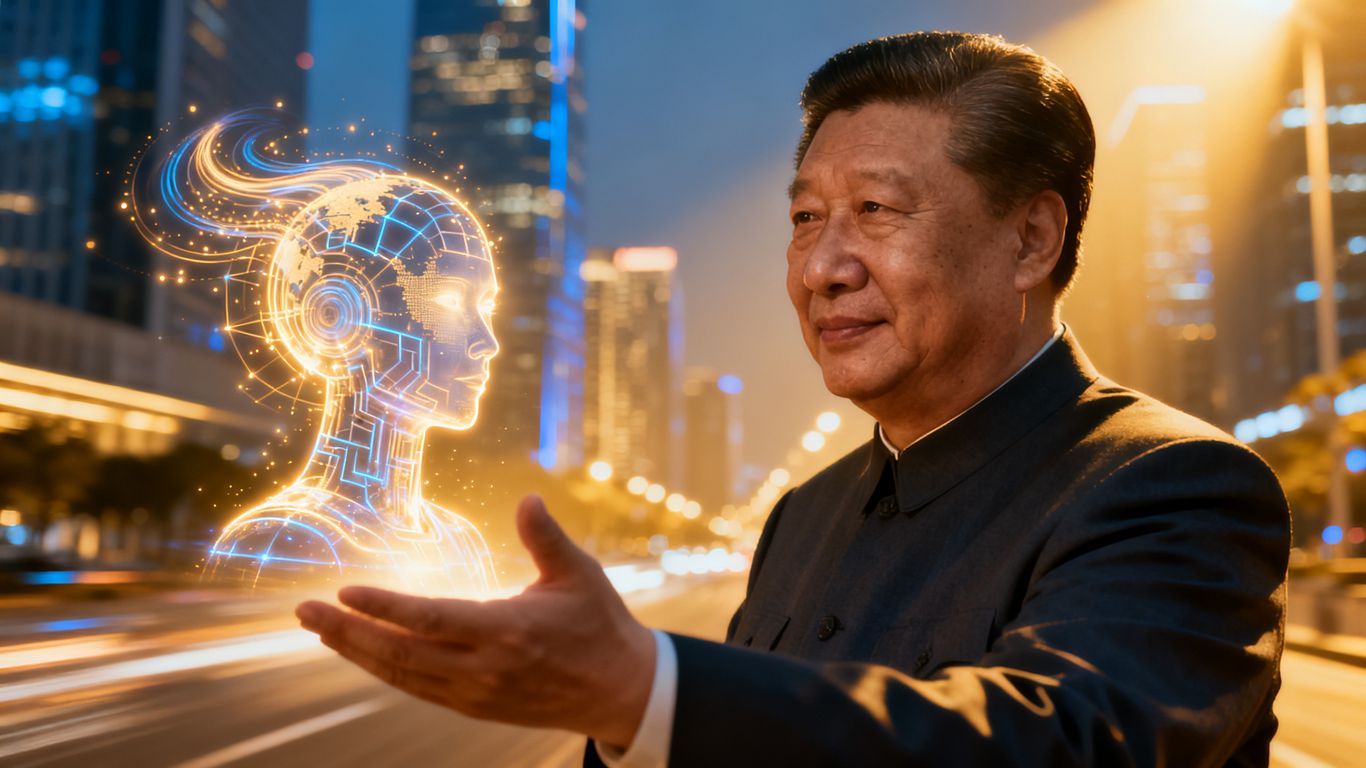

President Xi Jinping made his debut appearance at the World AI Conference in Shanghai, positioning China as a global leader in accessible artificial intelligence. Emphasising international cooperation over rivalry, Xi advocated for an inclusive technological order, urging nations to collaborate on safety and development while avoiding the politicisation of security concerns.
Key takeaways
- Xi called for global AI collaboration, describing development as a "symphony" rather than a solo performance.
- China is focusing on low-cost AI models to support the Global South.
- The World AI Cooperation Organization was highlighted as a milestone for international standard-setting.
- Beijing remains cautious about security risks, advocating for human-controlled monitoring systems.
Promoting global cooperation
Xi’s presence at the Shanghai summit marked a significant moment in China’s tech diplomacy. By framing AI development as a collective effort, he sought to differentiate China's approach from the protectionist tendencies seen in other major economies. His call for a "symphony of international cooperation" reflects a desire to establish a framework where AI benefits are shared broadly rather than restricted by geopolitical tensions. This diplomatic push aims to position China as a bridge-builder in an increasingly fractured technological landscape.
Market strategy and the Global South
China is aggressively positioning itself as a champion for the Global South, offering low-cost alternatives to Western AI technologies. By facilitating training courses and promoting the World AI Cooperation Organization, Beijing aims to build an ecosystem that is less dependent on US-led standards. Although the government did not announce new domestic subsidies during the event, the focus remains on scaling infrastructure and fostering national champions to maintain a competitive edge. Chinese models are already gaining traction internationally, with usage among foreign firms showing steady growth.
Navigating safety and governance
Addressing the inherent risks of advanced models, Xi underscored the necessity of robust regulation. He advocated for sophisticated monitoring and warning systems to ensure that artificial intelligence remains firmly under human control. While warning against the "overstretching" of national security concepts to limit technological access, Beijing continues to weigh options for managing security risks, including potential restrictions on foreign access to its most powerful domestic models. The focus is on finding a balance between fostering innovation and ensuring that the rapid deployment of AI does not threaten national or global stability.