
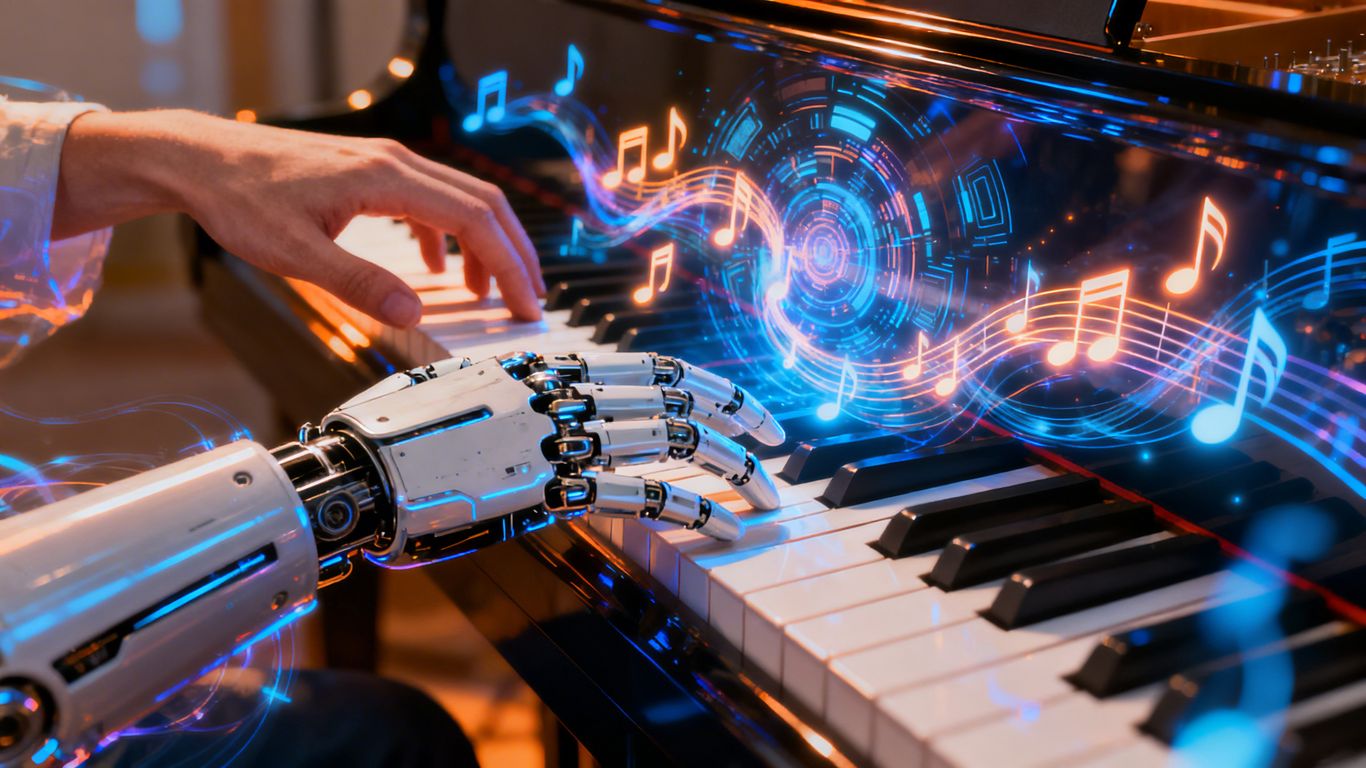

Artificial intelligence is rapidly reshaping the music world, sparking debates about creativity, copyright, and human expression. As AI tools collaborate with artists—and sometimes even create music independently—stakeholders are grappling with opportunities and challenges that could redefine the industry’s future.
Key Takeaways
- AI challenges traditional definitions of musical creativity and copyright ownership.
- New legislation and legal frameworks are emerging to address rights and responsibilities.
- The global approach to AI governance in music varies widely.
- Balancing innovation with protection for human creators is at the centre of ongoing debates.
AI’s Creative Power and Human Collaboration
AI in music composition has become a catalyst for innovation. Tools powered by machine learning can analyse vast musical catalogues to generate melodies, harmonies, and even complete songs—sometimes imitating the style of well-known artists. Far from replacing humans, many musicians use AI as a creative partner, quickly drafting musical ideas or exploring new genres. This makes music creation more accessible than ever before, empowering those without formal training but raising fundamental questions about the definition of creativity itself.
While AI excels at pattern recognition and speed, humans bring emotional depth, storytelling, and cultural context—qualities that often make music meaningful. The most exciting musical advances may lie in hybrid collaborations, where AI-generated ideas are refined with genuine human emotion and intent.
Copyright Law: Navigating Authorship and Infringement
The rise of AI-generated music poses significant copyright challenges. Traditionally, copyright protection is afforded to human creators, leaving AI-generated works in a legal grey area. Recent high-profile cases—like AI-created tracks imitating famous artists—highlight the complexities of authorship, copyright protection, and fair use.
Legislative responses are beginning to emerge. In the US, the Generative AI Copyright Disclosure Act and state-level laws like Tennessee’s ELVIS Act mandate transparency around the use of copyrighted materials in AI training and protect artists’ likeness and voice. Meanwhile, the EU’s regulatory framework focuses on the rights of content creators, allowing them to opt out of AI data mining. Globally, there is no unified approach, creating uncertainty for both developers and artists.
Innovation, Fairness, and Future Paths Forward
As AI’s appetite for data grows, there is an increasing reliance on both publicly available and synthetic data. However, overuse of synthetic data may result in a creative echo chamber, potentially eroding diversity in musical output. Developers and artists also struggle with economic fairness, as unauthorised use of copyrighted works can dilute royalties and creative incentives.
Proposed solutions include:
- Clearer Legislation: Adaptive laws that address the collaborative nature of AI-human music creation.
- Licensing and Compensation: Direct or collective licensing models to ensure artists are fairly compensated when their works are used for AI training.
- Responsible AI Use: Introducing technical safeguards and requiring transparent model disclosures to prevent unintentional copyright infringement.
- Global Cooperation: Collaborative regulation is needed to reconcile differing national and regional legal approaches.
Ultimately, the most promising future for music may combine the speed and innovation of AI with the emotional resonance and originality of human creators. As technologies evolve, so too must the frameworks that protect and inspire the artists of tomorrow.