
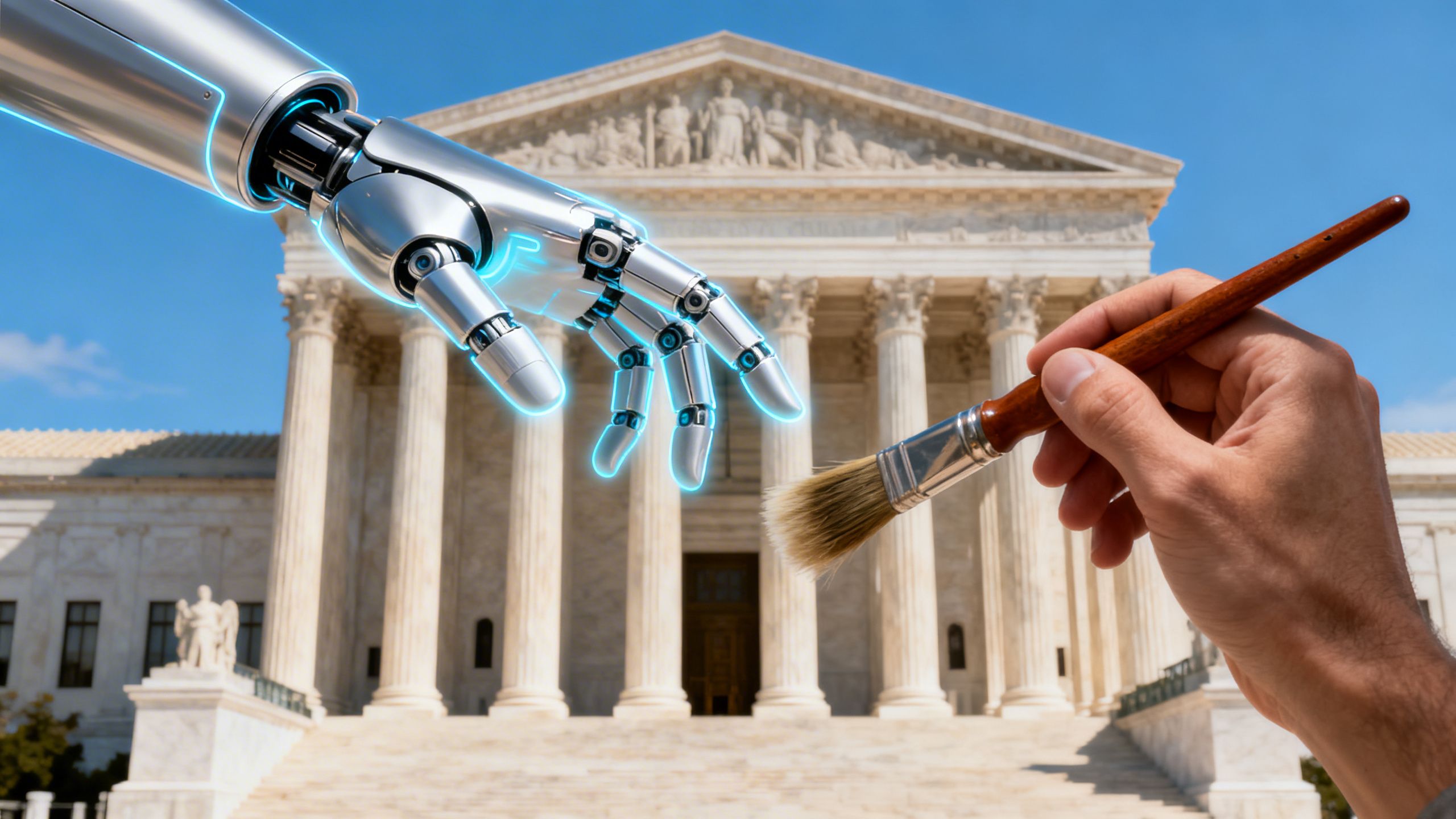

The U.S. Supreme Court has opted not to hear a significant case concerning copyright protection for artificial intelligence-generated art. This decision effectively upholds existing lower court rulings that require human authorship for copyright eligibility, leaving the legal landscape for AI creations in a state of uncertainty.
Key Takeaways
- The Supreme Court declined to review a case challenging copyright for AI-generated art.
- This maintains the current stance that human authorship is a prerequisite for copyright.
- The decision impacts the development and use of generative AI in creative industries.
The Case of 'A Recent Entrance to Paradise'
The case involved Stephen Thaler, a computer scientist who sought a federal copyright registration for a piece of visual art titled "A Recent Entrance to Paradise." Thaler claimed his AI system, "DABUS," independently created the artwork, which depicts train tracks entering a portal amidst vibrant plant imagery. However, the U.S. Copyright Office rejected his application in 2022, asserting that copyright protection is reserved for works with human creators.
Lower Courts Affirm Copyright Office Stance
Thaler's appeal to the Supreme Court followed affirmations of the Copyright Office's decision by lower courts. A federal judge in Washington ruled in 2023 that human authorship is a "bedrock requirement of copyright." This ruling was subsequently affirmed by the U.S. Court of Appeals for the District of Columbia Circuit in 2025.
Arguments and Implications
Thaler's legal team argued that his case was of "paramount importance" given the rapid advancements in generative AI. They warned that the court's refusal to intervene could irreversibly impact AI development and its integration into the creative industry during crucial formative years. The U.S. administration, during the Trump presidency, had also urged the Supreme Court not to hear the appeal, stating that the Copyright Act implicitly defines an "author" as human, not a machine.
This decision also follows a pattern, as the Supreme Court previously rejected Thaler's request to hear a related case concerning patent protection for AI-generated inventions, which were also denied on similar grounds by the U.S. Patent and Trademark Office.
Broader Context for AI Creations
The Copyright Office has also rejected copyright applications for images generated by AI systems like Midjourney, even when artists claimed they used AI as a tool. Thaler's case was distinct in that he argued his AI created the work autonomously. The Supreme Court's decision to not take up this dispute leaves the question of copyright for AI-assisted or AI-generated works open for future legal challenges, potentially requiring new legislation or different test cases to clarify the evolving legal landscape.