
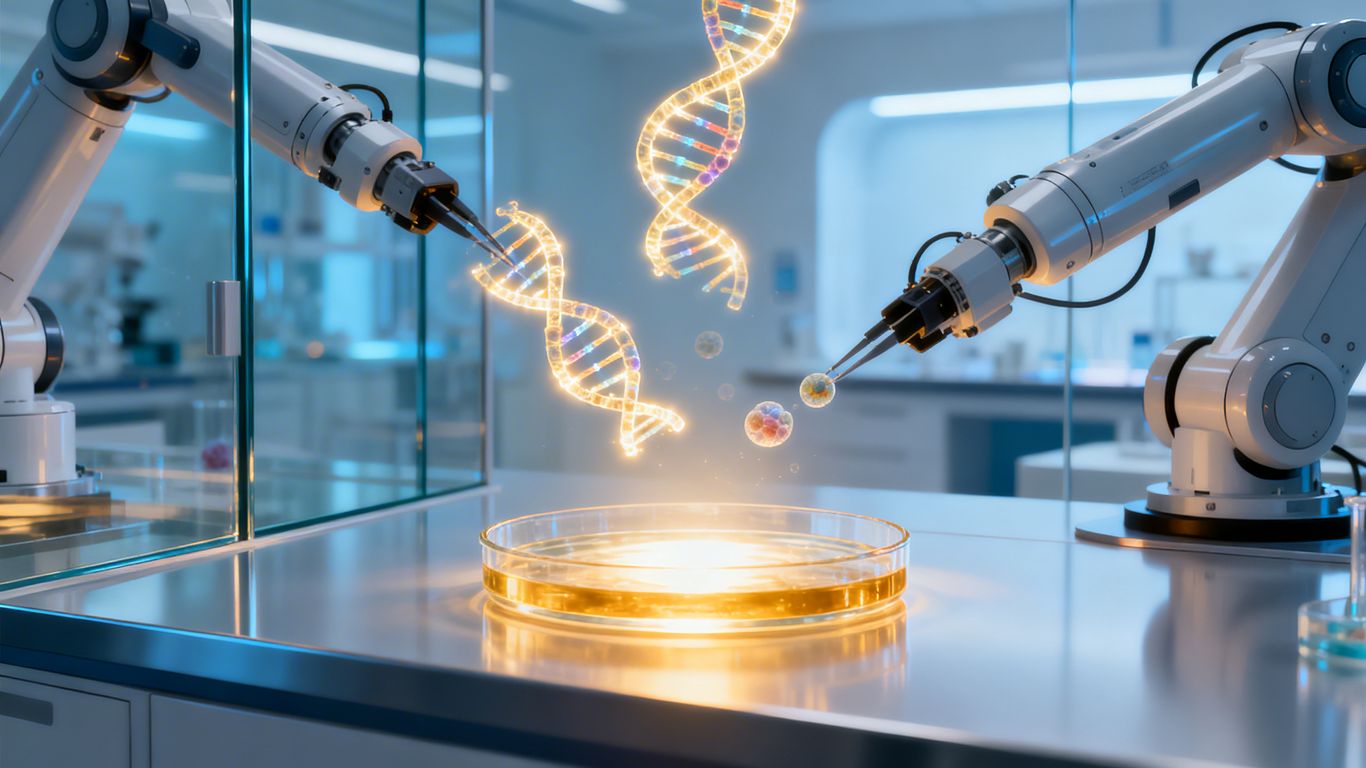

Artificial intelligence is ushering in a new era of medical discovery, offering unprecedented hope for diseases previously deemed untreatable. By analysing vast datasets and identifying novel applications for existing drugs, AI is accelerating the development of treatments for conditions ranging from antibiotic-resistant infections to rare genetic disorders and neurodegenerative diseases like Parkinson's.
Key Takeaways
- AI can rapidly screen millions of chemical compounds to identify potential new antibiotics, a critical need given rising drug resistance.
- Machine learning models are being used to discover new drug candidates for diseases with no known cure, such as Parkinson's, by identifying molecules that target disease mechanisms.
- Repurposing existing, approved drugs is a faster and more cost-effective approach to finding treatments for rare and neglected diseases.
- AI platforms can analyse complex biological data to predict which existing drugs might be effective against a wide range of diseases, significantly speeding up the discovery process.
Combating Superbugs and Neurodegenerative Diseases
For decades, the fight against antibiotic-resistant bacteria has been a losing battle, with new drug development lagging significantly. However, AI is changing this landscape. Researchers are using generative AI models to identify novel compounds with antibacterial properties, potentially offering new weapons against superbugs like MRSA and gonorrhoea. These AI-designed compounds often target bacteria in ways distinct from existing antibiotics, offering hope for overcoming resistance.
Beyond infections, AI is also tackling complex conditions like Parkinson's disease. Machine learning algorithms are being employed to search for drug candidates that can target the misfolded proteins in the brain associated with the disease. This approach significantly narrows down the vast number of potential molecules, making the search for effective treatments more efficient and cost-effective than traditional methods.
The Power of Drug Repurposing
A significant breakthrough lies in AI's ability to identify new uses for drugs already approved for other conditions. This strategy, known as drug repurposing, bypasses the lengthy and expensive process of developing entirely new drugs. Organisations like Every Cure are leveraging AI to scan millions of drug-disease combinations, identifying promising candidates for rare and often overlooked diseases.
This approach has already shown success. For instance, a common heart drug is being explored for angiosarcoma, and a Botox injection is being investigated for depression. Similarly, AI has identified potential repurposed treatments for rare conditions like Pitt–Hopkins syndrome and sarcoidosis. In one notable case, AI helped identify a combination of existing drugs that proved life-saving for a patient with a rare blood disorder.
A New Era of Therapeutic Design
AI is not only identifying existing drug applications but also aiding in the design of novel therapies. Systems like EDEN, developed by researchers using AI trained on evolutionary genetic data from millions of species, can learn the fundamental logic of life. This allows for the programmable modification and insertion of genes, paving the way for new treatments for cancer and hereditary diseases. These AI models can propose new molecules and enzymes with therapeutic objectives, accelerating the discovery of treatments for conditions previously considered incurable.
While challenges remain, including data accessibility and the long road from discovery to patient, AI's role in drug discovery and development is undeniable. It is revolutionising the process, making it faster, more efficient, and offering a beacon of hope for millions suffering from diseases once thought to be beyond medical reach.